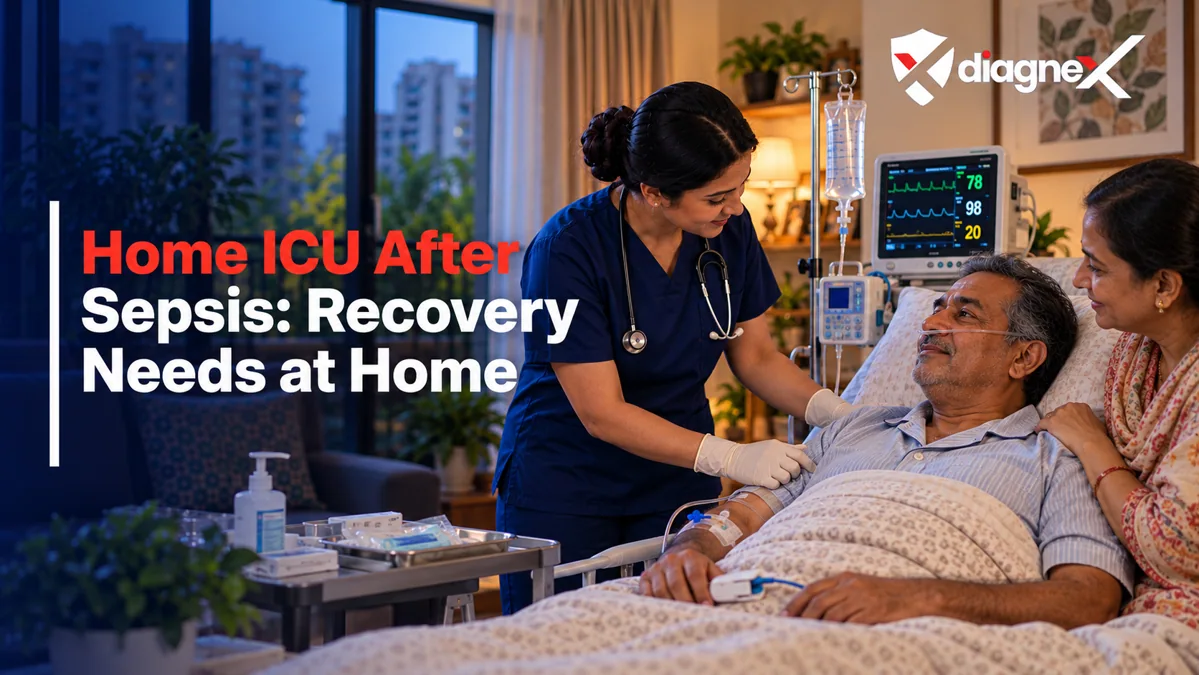
Home ICU after sepsis may be considered for selected patients who are stable enough to leave hospital but still need more medical, nursing or rehabilitation support than routine home recovery.
For related context, read Delirium After ICU: Supporting Recovery at Home and ICU-Acquired Weakness: Recovery and Rehabilitation at Home.
For related context, read Delirium After ICU: Supporting Recovery at Home and ICU-Acquired Weakness: Recovery and Rehabilitation at Home.
Sepsis is a life-threatening response to infection and can affect multiple organs. Even after the acute infection is controlled and the patient leaves intensive care, recovery may involve severe weakness, breathlessness, poor appetite, sleep disturbance, cognitive problems, anxiety, reduced mobility, kidney or respiratory problems and a higher risk of another serious infection.
The CDC notes that the body and mind may need time to recover after sepsis and recommends working with healthcare professionals on rehabilitation and safe activity. The Surviving Sepsis Campaign also recommends structured discharge planning, medication reconciliation, follow-up for new physical, cognitive and emotional problems, and post-hospital rehabilitation for selected sepsis survivors.
Home ICU After Sepsis Is a Step-Down Care Model
A patient who is actively septic, in shock, rapidly deteriorating or still needs urgent source control belongs in hospital.
Home ICU is a possible step-down pathway only after the treating team believes the patient is clinically stable enough for care outside the hospital and the remaining needs can be delivered safely at home.
Post-ICU Care at Home: What Families Should Expect explains why discharge from intensive care is often the start of another recovery phase rather than the end of critical illness care.
Who May Be Considered for Home Care After Sepsis ICU?
Some sepsis survivors leave hospital with ongoing oxygen needs, weakness, feeding difficulties, wounds, drains, catheters, complex medicines, glucose monitoring, kidney follow-up or major mobility limitations.
Others may not need ICU-level equipment but still require structured nursing and rehabilitation because they cannot safely manage daily activities on their own.
Who Is Suitable for ICU Care at Home? explains why the decision depends on current stability, predictability and the ability to support the patient's actual needs at home.
Who May Not Be Suitable?
Home care is generally not appropriate if the patient has unstable blood pressure, rapidly increasing oxygen needs, worsening confusion, recurrent shock, uncontrolled infection, active major bleeding, severe organ failure requiring urgent hospital intervention or a suspected infection source that still needs an emergency procedure.
The Surviving Sepsis Campaign recommends rapidly identifying or excluding an anatomical infection source that needs urgent source control and implementing that intervention as soon as practical.
A home setup should never delay hospital treatment for recurrent or worsening sepsis.
The Hospital Discharge Plan Should Define the Home Care Plan
The discharge summary should clearly document the sepsis episode, infection source if known, treatments given, current medicines, remaining organ problems, devices, follow-up needs and common impairments expected after sepsis.
The Surviving Sepsis Campaign specifically recommends including information about the ICU stay, sepsis and related diagnoses, treatments and common post-sepsis impairments in the discharge summary.
Hospital ICU to Home: How the Transition Is Planned explains why nursing, equipment, medicines, transport and emergency escalation should be coordinated before the patient leaves hospital.
Medication Reconciliation Is Essential
The medicine list after sepsis can differ substantially from the list before admission.
The Surviving Sepsis Campaign recommends medication reconciliation at both ICU and hospital discharge. The home team should therefore work from one current medication list that reflects what was stopped, started or changed in hospital.
Families should not restart old medicines or stop new medicines unless the treating clinician has reviewed the plan.
Antibiotics Need a Clear End Point
Some patients finish antibiotics before discharge, while others continue treatment at home.
The discharge plan should state the antibiotic, dose, route, timing and intended duration. Ongoing fever, worsening symptoms or lack of improvement should trigger medical review rather than automatic extension of the antibiotic course.
If intravenous antibiotics are required at home, the professional role, line care and monitoring responsibilities should be clearly defined. For more on the practical service arrangements, review home nursing before deciding what information the care team needs.
Recurrent Infection Needs Fast Attention
The CDC notes that people who have survived sepsis are at higher risk of developing sepsis again.
Families should act promptly when an infection is not improving or is getting worse. New fever, chills, worsening cough, painful urination, wound drainage, increasing confusion, low blood pressure or rapid breathing may need urgent clinical assessment depending on the patient's condition.
A previous sepsis admission should lower the threshold for asking whether a new infection could be becoming serious.
Vital-Sign Monitoring Should Be Patient-Specific
Some patients need blood pressure, pulse, temperature, oxygen saturation or blood glucose checked at defined intervals.
The treating team should specify what matters, how often it should be checked and which changes require escalation.
Families should avoid using generic target ranges from another patient because acceptable values can vary with heart, lung, kidney and other medical conditions.
Oxygen Support May Continue After Sepsis
Patients who had pneumonia, acute respiratory distress syndrome or prolonged ventilation may still need oxygen after discharge.
The oxygen method, flow or device setting, target saturation and review plan should come from the treating team.
A rising oxygen requirement, severe new breathlessness or falling saturation despite prescribed support can indicate deterioration and should prompt urgent reassessment.
Kidney Recovery May Need Ongoing Monitoring
Sepsis can be complicated by acute kidney injury.
Some patients recover kidney function before discharge, while others need follow-up blood tests, urine monitoring, fluid guidance or nephrology review. Reduced urine output, increasing swelling, persistent vomiting, worsening drowsiness or marked weakness should be reported.
The home team should know which laboratory tests are scheduled and who is responsible for reviewing the results.
Blood Pressure May Remain Unstable During Recovery
After severe sepsis, some patients remain weak or dizzy, especially when standing.
Low blood pressure can be related to dehydration, medicines, deconditioning or ongoing illness. Fainting, repeated near-fainting or shock-like symptoms need clinical review.
Caregivers should assist transfers carefully until the patient's standing tolerance is reliable.
Blood Glucose May Need Closer Follow-Up
Severe infection, steroids, nutrition changes and reduced activity can affect glucose control.
Patients with diabetes may temporarily need more frequent checks after discharge. The treating team should specify the home plan and what to do for high or low readings.
Home nurses can support prescribed monitoring, but treatment changes remain with the appropriate clinician.
Nutrition Is Part of Post-Sepsis Recovery
Weight loss, poor appetite and muscle loss are common after prolonged critical illness.
The CDC advises a balanced diet during recovery, while the 2024 Indian Society of Critical Care Medicine post-ICU position statement recommends attention to nutrition and multidisciplinary follow-up.
Nutrition should be individualized when the patient has kidney disease, diabetes, heart failure, swallowing problems or other dietary restrictions.
Swallowing Problems May Persist After ICU
Patients who were intubated, neurologically affected or very weak may have swallowing difficulty after critical illness.
Coughing during meals, repeated choking, a wet or gurgly voice or unexplained chest infections should prompt review. Food and fluid texture should follow professional assessment rather than family trial and error.
A patient who has not been cleared for oral intake should not be given food, water or tablets by mouth simply because they appear more alert.
Tube Feeding May Continue at Home
Some sepsis survivors require nasogastric or gastrostomy feeding during recovery.
The home plan should specify feed, water, medicine administration, positioning, tube care and what to do if the tube becomes blocked or dislodged.
Families should not attempt tube replacement or use improvised blockage-clearing methods.
Post-Sepsis Weakness Can Be Severe
The CDC lists general to extreme weakness and fatigue among common problems after sepsis.
A patient may struggle with sitting, standing, walking, bathing, dressing or climbing stairs even though the infection is improving.
This loss of function should be treated as part of recovery rather than as a lack of effort.
Rehabilitation Should Start Gradually
The CDC recommends building activity slowly, resting when tired and working with healthcare providers to decide which activities are safe.
The Surviving Sepsis Campaign suggests post-hospital rehabilitation for sepsis survivors who had mechanical ventilation for more than 48 hours or an ICU stay longer than 72 hours.
Rehabilitation at Home may be relevant when the patient needs structured mobility, strength and functional recovery after critical illness.
Post-ICU Rehabilitation Is More Than Walking
Recovery can involve physiotherapy, occupational therapy, nutrition, swallowing, cognitive support and mental-health care.
The right combination depends on the impairments that remain after discharge. One patient may mainly need strength and balance work, while another may need cognitive or communication support.
The rehabilitation plan should be reviewed as the patient's function changes.
Post-Intensive Care Syndrome Can Affect Recovery
The Society of Critical Care Medicine describes post-intensive care syndrome as new or worsened physical, cognitive or mental-health problems after ICU hospitalization.
These can include weakness, memory or concentration difficulties, anxiety, low mood, sleep problems and reduced independence. If the family is considering support at home, the Diagnex guide to medical equipment on rent explains the service pathway and its limits.
The Surviving Sepsis Campaign recommends assessment and follow-up for physical, cognitive and emotional problems after hospital discharge.
Confusion and Cognitive Changes Need Attention
The CDC notes that sepsis survivors may have poor concentration or difficulty knowing what is real after returning home.
Some cognitive symptoms improve over time, but sudden worsening confusion may also signal infection, low oxygen, dehydration, medication effects or another acute problem.
Families should report major changes rather than assuming every cognitive symptom is a normal consequence of ICU care.
Sleep, Anxiety and Mood Can Change After Sepsis
Sepsis survivors may experience sleep difficulty, anxiety, low mood, nightmares, panic attacks or a loss of confidence.
These symptoms can affect appetite, activity and willingness to participate in rehabilitation.
Persistent depression, severe anxiety, suicidal thoughts or inability to function warrants professional support.
Home ICU Nursing May Be Needed
Some patients need skilled nursing after sepsis because of oxygen, medicines, wound care, feeding tubes, catheters, glucose monitoring, pressure-area care or other clinical tasks.
Home Nursing may be relevant when the discharge plan includes defined nursing requirements.
The number of nursing hours should match the patient's actual dependency rather than a fixed sepsis-recovery package.
Not Every Sepsis Survivor Needs 24-Hour Nursing
One patient may need continuous nursing temporarily because of oxygen dependence, multiple devices or severe weakness, while another may need scheduled nursing visits plus family support.
The level of care should reduce or increase as the patient's medical and functional needs change.
Regular reassessment helps avoid both under-support and unnecessary long-term dependence on high-intensity care.
Pressure-Injury Prevention May Be Needed
A bedbound or very weak patient may be unable to reposition independently.
The home plan may include a pressure-relieving mattress, skin checks, repositioning, moisture management and nutrition support.
Persistent redness, blistering or skin breakdown should be assessed promptly.
Blood-Clot Risk May Persist After Critical Illness
Prolonged immobility can increase the risk of venous thromboembolism.
The discharge plan may include mobilisation, compression or anticoagulant medicine depending on the patient's risk and recent hospital course.
New one-sided leg swelling, sudden breathlessness, chest pain or collapse requires urgent assessment.
Wounds, Drains and Catheters Need Defined Care
Some sepsis patients leave hospital with surgical wounds, pressure injuries, drains, urinary catheters or vascular access.
Each device or wound should have written care instructions, expected findings and escalation criteria.
Fever, increasing redness, cloudy drainage, blocked catheter flow or rapidly worsening pain should be reported.
The Home ICU Setup Should Match Residual Needs
Possible equipment may include a hospital bed, pressure-relief mattress, blood-pressure monitor, pulse oximeter, oxygen source, suction machine, feeding pump, infusion equipment, wheelchair or commode.
Not every patient needs all of these items.
The Home ICU pathway is most useful when equipment, nursing and follow-up are selected around the patient's actual discharge plan.
Power and Oxygen Backup May Be Essential
If essential care depends on oxygen, suction, feeding pumps or another powered device, the home needs a failure plan.
Families should know how long backup power lasts, how backup oxygen is accessed and whom to call when equipment fails.
A patient who is clinically dependent on a device cannot safely remain at home without a realistic backup route.
Caregiver Training Should Happen Before Discharge
The Surviving Sepsis Campaign recommends shared decision-making around ICU and hospital discharge planning.
Family members should know which tasks they are expected to perform, which remain nursing responsibilities and what changes require urgent escalation.
Training may include mobility assistance, skin checks, medicines, infection warning signs, feeding precautions and device care.
Follow-Up Should Address New Problems, Not Only the Original Infection
The Surviving Sepsis Campaign recommends follow-up with clinicians able to support new and long-term problems after sepsis.
This may include kidney, respiratory, physical, cognitive, emotional or functional issues.
A follow-up plan that only asks whether the original infection has resolved may miss important consequences of critical illness.
Post-Critical Illness Follow-Up Can Be Helpful
The Surviving Sepsis Campaign suggests referral to a post-critical-illness follow-up program when one is available.
The 2024 Indian Society of Critical Care Medicine position statement likewise supports structured multidisciplinary post-ICU follow-up. For care planning beyond this article, compare bedridden patient care at home with the instructions already given by the treating professional.
The exact model varies by health system, but the principle is that recovery should be actively reviewed rather than left entirely to the family.
When Should a Sepsis Survivor Return to Hospital?
Urgent hospital assessment is needed for: • severe or rapidly worsening breathlessness; • rapidly increasing oxygen needs or falling oxygen saturation; • new confusion, marked drowsiness or inability to wake normally; • very low blood pressure, fainting or shock-like symptoms; • rapidly worsening fever, chills or signs of a new infection; • chest pain or collapse; • very low urine output with worsening swelling or drowsiness; • repeated vomiting with inability to take essential medicines or feeds; • new one-sided leg swelling with sudden breathlessness or chest pain; • uncontrolled bleeding; • failure of essential medical equipment when safe support cannot be maintained; • any other major deterioration identified in the discharge plan.
Because sepsis survivors are at increased risk of sepsis again, worsening infection symptoms deserve prompt attention.
When Home ICU May No Longer Be Appropriate
Home care may stop being appropriate if the patient develops recurrent sepsis, unstable circulation, escalating respiratory failure, worsening organ dysfunction, repeated emergency events or a need for diagnostics and interventions that cannot be delivered safely at home.
It may also become unsafe if qualified nursing, essential equipment, backup power or emergency transport cannot be maintained.
Returning to hospital when the patient's needs increase is a safety decision, not a failure of home recovery.
A Practical Home ICU Checklist After Sepsis
Before discharge, families can confirm: • The treating team agrees that home care is appropriate. • The infection source and treatment plan are documented. • The current medication list has been reconciled. • Antibiotic duration and route are clear when treatment continues. • Oxygen and vital-sign monitoring instructions are written down. • Kidney, glucose or other organ follow-up is scheduled where needed. • Feeding and swallowing plans are clear. • Wounds, drains and catheter care are defined. • Mobility and rehabilitation plans are coordinated. • Physical, cognitive and emotional recovery needs have been considered. • Nursing competencies and shift coverage are confirmed. • Required equipment has been installed and tested. • Backup power and oxygen are available when essential. • Follow-up appointments and laboratory tests are scheduled. • Emergency contacts and hospital-transfer arrangements are written down. • Family caregivers know which signs may indicate recurrent infection or sepsis.
How to Arrange Home ICU After Sepsis With Diagnex
To plan home care after sepsis ICU, share the hospital discharge summary, infection source if known, current oxygen needs, medicines, antibiotic plan, kidney or other organ follow-up, feeding status, wounds or devices, mobility, nursing requirements, rehabilitation plan, equipment needs and locality.
Diagnex can review whether the requirement fits Home ICU, Home Nursing, Rehabilitation at Home or another appropriate pathway based on the treating team's plan and the patient's current stability. Exact staffing, equipment and service availability are confirmed for the specific locality and care requirement.
For service coordination, use the Diagnex Contact page.
Frequently asked questions
Can a patient go home after sepsis ICU care?
Yes, selected patients can go home when the treating team considers them stable enough and the remaining nursing, oxygen, medicine, device, rehabilitation and follow-up needs can be managed safely outside hospital.
Does every sepsis survivor need home ICU?
No. Some patients need routine recovery support, while others need high-dependency nursing, oxygen, equipment or rehabilitation. The level of care should match the patient's residual needs.
Why is medication reconciliation important after sepsis?
Medicines are often started, stopped or changed during critical illness. A reconciled discharge list helps reduce errors when the patient returns home.
Can weakness continue after sepsis?
Yes. Severe weakness, fatigue and reduced mobility are common after sepsis and prolonged ICU care. Rehabilitation should be gradual and guided by the treating team.
Can sepsis happen again?
Yes. The CDC notes that sepsis survivors have a higher risk of sepsis again. Worsening infection symptoms should therefore be assessed promptly.
When is a nurse needed after sepsis ICU?
Nursing may be needed for oxygen, medicines, wound or device care, feeding support, glucose checks, pressure-area care, clinical observation or other skilled tasks.
When should a sepsis survivor return to hospital?
Rapidly worsening infection symptoms, low blood pressure, severe breathlessness, rising oxygen requirements, major confusion, very low urine output, collapse or another sudden deterioration should trigger urgent hospital assessment according to the discharge plan.
References and further reading
This article provides general education and does not replace an intensivist, infectious-disease specialist, treating doctor or hospital discharge plan. Clinical points were cross-checked against current CDC guidance on recovery after sepsis, the Surviving Sepsis Campaign 2021 guideline recommendations for post-ICU and post-hospital care, current Society of Critical Care Medicine resources on post-intensive care syndrome and the 2024 Indian Society of Critical Care Medicine position statement on post-ICU care.
Related Diagnex services and guides
Explore the Home ICU service pathway and the Home ICU article library for more information.
Diagnex publishes general healthcare information to support care planning. Individual decisions about diagnosis, prescriptions and treatment remain with the treating professional. Read our medical content policy and editorial standards.