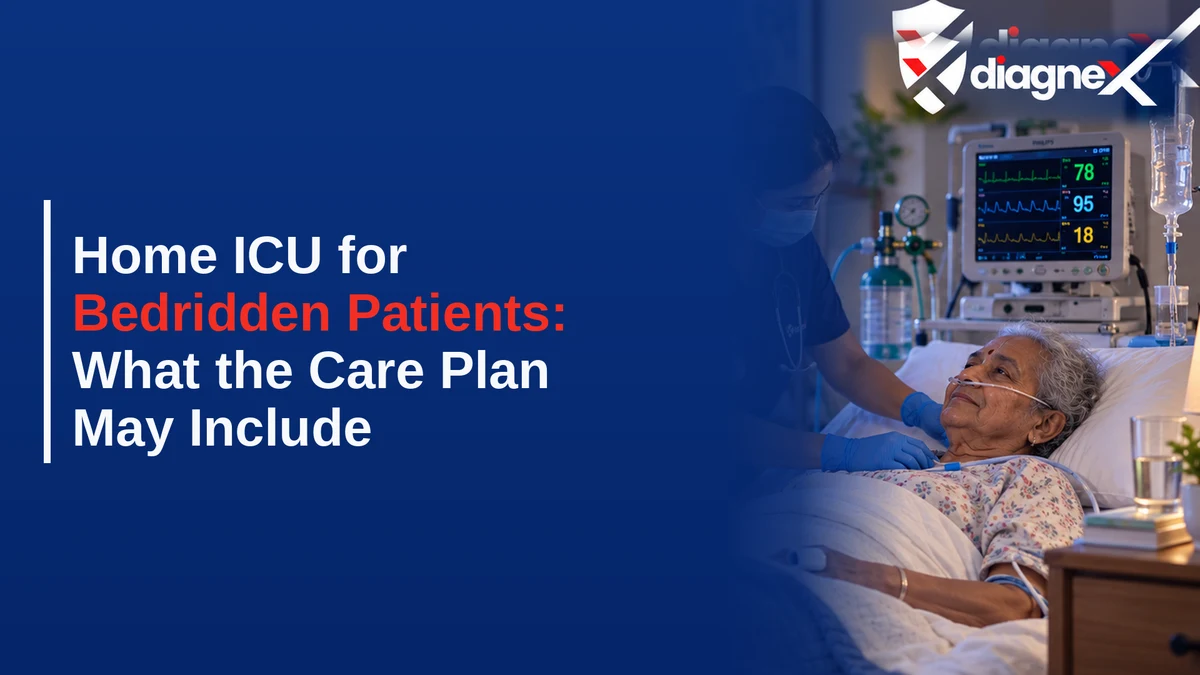
Home ICU cost in India is not one fixed daily or monthly number because the final price depends on the patient's clinical needs, nursing hours, equipment, respiratory support, consumables, location and duration of care.
For related context, read Home ICU After Brain Injury: What Families Need to Plan and Home ICU Equipment Rental Cost: What Affects Pricing?.
For related context, read Home ICU After Brain Injury: What Families Need to Plan and Home ICU Equipment Rental Cost: What Affects Pricing?.
A relatively simple step-down setup may need a hospital bed, oxygen concentrator, monitor, suction machine and one nursing shift. A ventilator-dependent or tracheostomy patient may need critical-care nursing around the clock, a ventilator, backup oxygen, suction, infusion equipment, pressure-relief support and significantly more consumables.
The most useful way to understand ICU at home cost in India is to separate the estimate into four parts: one-time setup costs, recurring equipment rental, professional staffing, and variable clinical supplies or services.
There Is No Single Home ICU Price for Every Patient
A quote should be built around the patient's actual discharge plan rather than a generic package.
The diagnosis matters, but the daily care requirement matters more. Two patients with the same condition may have very different costs if one needs a nurse for 12 hours and basic oxygen while the other needs 24-hour critical-care nursing and mechanical ventilation.
The Home ICU service page is useful for seeing how equipment, nurses, doctor visits and supplies can be combined into a patient-specific estimate.
The Four Main Parts of a Home ICU Bill
Most Home ICU quotations can be understood by separating charges into: • equipment rental or purchase; • nursing and attendant staffing; • doctor, physiotherapy, laboratory or other professional visits; • consumables, medicines, oxygen refills, delivery, installation, maintenance and other variable items.
This separation is important because a low equipment-only quote can look attractive while excluding the much larger recurring staffing cost.
Nursing Is Often the Largest Recurring Cost
Nursing hours can become the biggest part of the monthly bill.
A patient who needs one trained nurse for a 12-hour shift costs less than a patient requiring two-shift or 24-hour cover. Critical-care-experienced nursing can also cost more than general bedside nursing because the required competencies may include ventilator observation, tracheostomy care, suction, infusion pumps, central lines, neurological observation or rapid recognition of deterioration.
Home Nursing may be relevant when families are comparing general skilled nursing with higher-dependency Home ICU staffing.
A Trained Nurse and a Critical-Care Nurse Are Not the Same Cost Category
Families should ask exactly what nursing category is being quoted.
A patient who only needs medication support, wound care and routine monitoring may not require the same staff profile as a ventilated patient with a tracheostomy and multiple devices.
Paying for a higher skill level may be necessary when the care plan requires it. Conversely, using critical-care staffing for a stable low-dependency patient may increase cost without providing proportionate benefit.
12-Hour and 24-Hour Coverage Change the Monthly Estimate Substantially
A quotation should state whether the nursing amount covers one shift, two shifts, or true round-the-clock coverage.
Diagnex's public Home ICU estimator currently lists 30-day nursing options that illustrate this difference. The estimator shows trained nursing and critical-care-experienced nursing as separate choices, with 24-hour cover costing more than 12-hour cover.
These figures are planning examples, not a universal India-wide tariff, and the final quotation depends on city, staff availability and patient requirements.
Equipment Cost Depends on What the Patient Actually Needs
A Home ICU can involve a manual or automatic hospital bed, multiparameter monitor, oxygen concentrator, oxygen cylinder, BiPAP, ventilator, suction machine, syringe pump, infusion pump, air mattress and other equipment.
A patient does not automatically need every device on this list.
How to Set Up an ICU at Home: Step-by-Step Guide explains why the equipment list should follow the treating doctor's plan and the patient's current clinical needs.
A Ventilator Can Change the Cost Structure
Mechanical ventilation usually raises the monthly cost because the ventilator itself is more expensive than basic oxygen equipment and the patient may also need more experienced nursing, suction, circuits, filters, backup power and emergency respiratory supplies.
The cost impact is therefore not just the ventilator rental.
A ventilator-dependent patient may require an entire higher-acuity care model around the machine.
BiPAP Costs Less Than a Ventilator, but the Clinical Use Is Different
BiPAP or another non-invasive ventilation device may cost less to rent than an invasive ventilator, but the two are not interchangeable. For more on the practical service arrangements, review medical equipment on rent before deciding what information the care team needs.
The treating respiratory team decides whether the patient needs oxygen, BiPAP, invasive ventilation or another form of respiratory support.
Families should never choose the cheaper machine as a substitute for the prescribed respiratory plan.
Oxygen Cost Depends on the Delivery Method
Oxygen support can involve an oxygen concentrator, cylinders for backup or transport, refills, tubing and masks.
A concentrator has a monthly rental or purchase cost and depends on electricity. Cylinders may add recurring refill costs.
Patients with high or continuous oxygen needs may also require backup planning that adds to the overall Home ICU budget.
The Hospital Bed Can Be a Small or Moderate Part of the Total
A manual hospital bed generally costs less to rent than an automatic bed.
The more important question is which bed is clinically appropriate. A patient who needs frequent positioning, elevation or caregiver-assisted transfers may benefit from an automatic bed, while another patient may be safely managed on a simpler setup.
The bed should be selected for function, not only appearance.
Pressure-Relief Equipment Can Add to the Setup
Bedbound patients may require an air mattress or another pressure-relieving surface.
This can add a purchase or rental cost, but pressure prevention may reduce the risk of wounds that create much greater clinical and financial burden.
The need depends on mobility, sensation, skin condition, nutrition and how often the patient can be repositioned.
Monitoring Equipment May Be Essential for Some Patients and Unnecessary for Others
A multiparameter monitor adds cost, but continuous monitoring is not needed for every stable patient.
If the treating team only requires scheduled blood pressure, pulse and oxygen checks, simpler equipment may be enough.
The quotation should therefore distinguish essential monitoring from optional equipment.
Suction Machines and Infusion Pumps Add Separate Rental Costs
Suction may be needed for tracheostomy or secretion management, while syringe or infusion pumps may be required for controlled medication delivery.
These devices each add rental cost and may also create consumable costs for tubing, syringes, catheters, filters or circuits.
The home team should confirm whether the patient will actually use the device before adding it to a long-term rental plan.
One-Time Setup Cost and Monthly Running Cost Are Different
Families should ask for these two categories separately.
One-time charges can include delivery, installation, room preparation, equipment deposits or initial purchase of reusable items. Recurring charges can include equipment rental, nursing, oxygen refills, consumables, doctor visits, physiotherapy and tests.
A quotation that combines everything into one number can make it difficult to understand what will continue in the second month.
Delivery, Installation and Deposits Should Be Confirmed in Writing
A low advertised rental price may not include delivery, setup or refundable security deposits.
Diagnex's Home ICU estimator states that its displayed estimate excludes GST and that delivery, setup, any deposit and prices for purchase items are confirmed in the quotation.
Families should ask for the same level of clarity from any provider before equipment is dispatched.
GST Can Change the Final Payable Amount
A displayed subtotal may not be the amount that appears on the final invoice.
The quotation should clearly state whether GST is included or additional and which line items are taxable.
Families should compare final payable totals rather than only pre-tax advertised figures.
Consumables Can Be a Meaningful Recurring Expense
Consumables may include suction catheters, oxygen masks, nasal cannulas, ventilator circuits, HME or bacterial filters, gloves, syringes, dressings, underpads and feeding or catheter supplies.
A high-dependency patient may use some items daily.
Families should ask whether consumables are bundled into the monthly package or billed according to actual use.
Medicines Are Often Separate From Home ICU Charges
The price of medicines can vary substantially according to the diagnosis and prescription.
Antibiotics, anticoagulants, insulin, nebulised medicines, pain medicines, injections and other treatments may not be included in the Home ICU service quotation.
The family should separate medical treatment costs from infrastructure and staffing costs when budgeting.
Doctor Visits Add a Professional Fee
Some patients need regular home medical review while others continue follow-up in hospital or through their existing specialist.
A doctor home visit normally adds a per-visit cost.
The number of visits should reflect clinical need rather than being added automatically to every package.
Physiotherapy and Rehabilitation Can Add Recurring Cost
Post-ICU patients may need physiotherapy for weakness, mobility, breathing exercises or transfer training.
These sessions are typically billed separately from nursing and equipment.
A family planning several weeks of recovery should include rehabilitation in the monthly budget instead of treating it as an unexpected add-on.
Blood Tests and Other Diagnostics May Be Charged Separately
Some home-care plans require blood glucose checks, laboratory collection or periodic diagnostic testing.
The frequency can change as the patient improves or deteriorates.
The quotation should identify which tests are included and which will be billed separately when ordered.
City and Locality Can Affect Home ICU Charges
Home ICU pricing is not always identical across India.
Nursing availability, travel time, equipment logistics, delivery distance and local operating costs can vary by city and neighbourhood.
A quote for Mumbai, Navi Mumbai, Kolkata or Howrah should therefore be treated as location-specific rather than a national price guarantee.
Duration of Care Changes the Effective Daily Cost
Equipment rental is often priced differently for 15-day and 30-day periods.
A 30-day rental may have a lower effective daily equipment cost than repeatedly booking short periods, while long-term staffing still remains a major recurring expense. If the family is considering support at home, the Diagnex guide to home nursing explains the service pathway and its limits.
Families should ask what happens if the patient improves earlier than expected or needs the setup for longer.
Renting Is Often Practical for Short or Uncertain Recovery
Rental reduces the initial capital cost and can be practical when the duration of care is uncertain.
It also makes it easier to scale equipment up or down when the patient's needs change.
Families should still check maintenance, replacement, breakdown support and deposit terms.
Buying May Make Sense for Long-Term Stable Needs
Purchase can become worth considering when a device is likely to be used for many months and the clinical need is stable.
However, buying shifts responsibility toward maintenance, servicing, replacement and eventual resale or disposal.
The decision should be based on expected duration and total cost of ownership, not only the monthly rental figure.
Backup Equipment Can Increase Cost but Reduce Risk
Ventilator-dependent, oxygen-dependent or suction-dependent patients may need backup power, spare respiratory circuits, backup oxygen or even alternative equipment.
These items can increase the quotation.
The value of backup should be judged against the clinical consequence of equipment failure, not only against the rental price.
Room Readiness Can Create Additional Household Expense
Some homes need electrical work, better backup power, additional space around the bed, improved access for equipment or changes to support safe transfers.
These are not always provider charges, but they can still affect the family's total cost.
The room should be assessed before discharge when the patient depends on large or powered equipment.
Illustrative Current Diagnex Equipment Rates
Diagnex's public estimator shows city- and duration-specific rates. With Kolkata selected for a 30-day plan at the time this article was prepared, the page listed examples such as: • manual hospital bed: ₹3,000 for 30 days; • automatic hospital bed: ₹12,000 for 30 days; • multiparameter monitor: ₹9,000 for 30 days; • oxygen concentrator: ₹3,000 for 30 days; • BiPAP machine: ₹4,000 for 30 days; • suction machine: ₹3,000 for 30 days; • syringe or infusion pump: ₹4,500 for 30 days; • ventilator: ₹40,000 for 30 days.
These are examples from one selected city and plan length, not a universal India-wide quotation. Availability, model, delivery, deposits, GST and clinical requirements can change the final amount.
Illustrative Current Diagnex Nursing Rates
The same 30-day estimator currently shows separate staffing categories.
With Kolkata selected, the displayed examples include trained nursing for 12-hour or 24-hour coverage and critical-care-experienced nursing for 12-hour or 24-hour coverage. The listed 30-day amounts rise from ₹45,000 for a trained 12-hour nursing shift to ₹90,000 for 24-hour critical-care-experienced cover.
The purpose of showing these figures is to illustrate why nursing intensity can dominate the monthly cost. The final quote should be confirmed for the actual city, shift pattern and clinical requirement.
A Simple 30-Day Supportive-Care Example
Using the same Kolkata 30-day public estimator only as an illustration, a manual bed at ₹3,000, oxygen concentrator at ₹3,000, monitor at ₹9,000, suction machine at ₹3,000 and trained 12-hour nursing at ₹45,000 would total ₹63,000 before GST and before delivery, setup, deposits, consumables, medicines, doctor visits, physiotherapy or tests.
This is not a recommended package and not a quotation. It simply shows how equipment and staffing combine.
A Ventilator-Dependent Example Can Be Much Higher
Using the same estimator as an illustration, an automatic bed at ₹12,000, monitor at ₹9,000, ventilator at ₹40,000, oxygen concentrator at ₹3,000, suction machine at ₹3,000, infusion pump at ₹4,500 and 24-hour critical-care-experienced nursing at ₹90,000 would total ₹1,61,500 for 30 days before GST and other excluded costs.
The actual setup could be lower or higher depending on the treating team's plan, staffing pattern, equipment already owned and consumable use.
Why Home ICU Is Not Automatically Cheaper Than Hospital ICU
It is tempting to compare a monthly equipment rental against a hospital ICU daily tariff, but that comparison is incomplete.
A hospital ICU charge can include infrastructure, nursing, specialists, equipment, diagnostics and emergency capability. A Home ICU quotation may separate all of these items.
Home ICU vs Hospital ICU: What Families Should Compare explains why the correct comparison is the total cost of the actual clinical plan, not one advertised line item.
Home ICU Can Become Expensive When Care Intensity Is High
Costs rise quickly when the patient requires 24-hour critical-care nursing, ventilator support, multiple pumps, frequent doctor visits, high oxygen use, large volumes of consumables, frequent testing or complex backup systems.
Long-term tracheostomy or ventilator care may remain resource-intensive even outside hospital.
Families should therefore treat claims that Home ICU is always a fixed percentage cheaper than hospital ICU with caution.
Home ICU Can Become Less Expensive as the Patient Improves
One advantage of home care is that equipment and staffing can sometimes be reduced as the patient becomes more stable.
A ventilator may no longer be needed, nursing may reduce from 24 hours to 12 hours, or monitoring may become intermittent.
A quotation should allow for reassessment rather than locking the family into unnecessary high-acuity support.
Who Decides What Can Be Removed From the Setup?
Clinical equipment should not be removed simply to lower the bill.
The treating doctor or relevant specialist should decide when oxygen, BiPAP, ventilator support, monitoring or other devices can be reduced or discontinued.
Is ICU at Home Safe? What Needs to Be in Place explains why cost decisions should never compromise the clinical safety plan.
The Patient's Suitability Affects the Economics
Home ICU is only meaningful when the patient is stable enough for home care.
If repeated emergency transfers, urgent imaging, procedures or hospital interventions are expected, the home model may become clinically inappropriate and financially inefficient.
Who Is Suitable for ICU Care at Home? explains the stability and support factors families should consider before investing in the setup.
Discharge Planning Can Prevent Duplicate Costs
Families can lose money when hospital discharge happens before the home setup is fully planned.
For example, equipment may be rented before the final prescription is known or a second device may need to be added urgently because the first quote was incomplete. For care planning beyond this article, compare bedridden patient care at home with the instructions already given by the treating professional.
Hospital ICU to Home: How the Transition Is Planned explains why the home equipment, staffing and emergency pathway should be coordinated before discharge.
Insurance Coverage Should Be Checked Before Assuming Reimbursement
Home-care reimbursement varies by insurer and policy.
IRDAI's current health-insurance information states that insurers are required to make products, add-ons or riders available across a wide range of treatment situations, including domiciliary hospitalisation and homecare treatment, but this does not mean every policy automatically covers every Home ICU expense.
Families should check the policy wording, customer information sheet, sub-limits, co-payments, exclusions, network rules and whether pre-authorisation is required before assuming the cost will be reimbursed.
Ask the Insurer Which Home Costs Are Actually Eligible
Even when a policy includes domiciliary or homecare treatment, the eligible items may differ.
Equipment rental, nursing, doctor visits, medicines, consumables, laboratory services and ambulance transfers may be treated differently under the policy.
A written response from the insurer or third-party administrator is more useful than relying on a verbal assumption.
What Should a Complete Home ICU Quotation Include?
Before accepting a quotation, families should ask for: • equipment name, model and rental period; • nursing category, shift length and number of staff; • doctor and physiotherapy fees; • consumables and oxygen refill policy; • medicines included or excluded; • delivery and installation charges; • refundable deposits; • maintenance and replacement policy; • backup equipment charges; • GST and other taxes; • emergency replacement or after-hours charges; • cancellation or early-return policy; • extension rates if care continues longer than planned.
What Information Does a Provider Need Before Giving an Accurate Price?
A useful quotation usually requires the patient's current diagnosis, discharge plan, oxygen or ventilator needs, tracheostomy status, monitoring requirements, infusion needs, mobility, pressure-injury risk, nursing procedures, expected duration and locality.
A quote given without this information may be only a rough equipment estimate.
Families should be cautious about treating an instant package price as a final clinical plan.
A Practical Home ICU Cost Checklist
Before finalising the budget, confirm: • Is the patient clinically suitable for Home ICU? • Which equipment is essential? • What can be rented and what must be purchased? • Is nursing 12-hour or 24-hour? • Does the patient need a general trained nurse or critical-care-experienced nurse? • Are doctor visits included? • Are physiotherapy sessions included? • Are laboratory tests included? • Are consumables bundled or billed as used? • Are medicines separate? • Is oxygen refill cost separate? • Are delivery and setup included? • Is there a refundable deposit? • Is GST included or additional? • Is backup power or backup equipment required? • What happens if equipment fails? • What happens if the patient improves early? • What happens if care extends beyond 30 days? • Is any part potentially reimbursable under insurance?
How to Get a Home ICU Cost Estimate From Diagnex
To estimate Home ICU charges, share the treating doctor's discharge plan, required nursing hours, oxygen or ventilator needs, monitoring requirements, equipment list, expected duration and locality.
Diagnex can review the requirement and prepare a quotation based on the actual care plan. Public estimator figures are planning rates, while the final quotation confirms service availability, delivery and setup, deposits, GST and purchase-item pricing.
For a patient-specific quotation, use the Diagnex Contact page.
Frequently asked questions
How much does a Home ICU cost per month in India?
There is no single national monthly price. The amount depends mainly on nursing hours, staff skill level, ventilator or oxygen needs, equipment rental, consumables, doctor visits, rehabilitation, duration and city. A basic step-down setup can cost far less than a ventilator-dependent setup with 24-hour critical-care nursing.
What is usually the biggest Home ICU expense?
For many patients, nursing is the largest recurring cost, especially when 24-hour or critical-care-experienced staffing is required. Ventilator-dependent care can also add substantial equipment and consumable costs.
Is Home ICU cheaper than hospital ICU?
It can be, but not always. The correct comparison is the total cost of the actual care plan. High-intensity Home ICU with 24-hour critical-care nursing, ventilation, consumables and frequent medical review can remain expensive.
Is it better to rent or buy Home ICU equipment?
Rental is often practical for short-term or uncertain recovery. Buying may make more sense for long-term stable needs, but maintenance, servicing and replacement should be included in the comparison.
Are nursing charges included in equipment rental?
Usually they should be treated as separate line items unless a provider specifically offers a bundled package. Families should ask for a written breakdown.
Does health insurance cover Home ICU in India?
Coverage varies by insurer and policy. Some products may include domiciliary hospitalisation or homecare treatment, but equipment, nursing and other items can have conditions, sub-limits or exclusions. Check the policy wording and obtain confirmation from the insurer or TPA.
Why can two Home ICU quotations be very different?
They may include different nursing hours, nurse skill levels, equipment, consumables, delivery charges, deposits, taxes, backup systems or professional visits. Compare the line items rather than only the final headline number.
Pricing and Insurance References
Diagnex pricing examples in this article are based on the public Home ICU estimator and are provided only to illustrate how equipment and staffing costs combine. They are not a universal India tariff or a patient-specific quotation. Exact charges depend on city, plan length, clinical requirements, availability, taxes, delivery, setup and consumables.
Insurance guidance was cross-checked against current Insurance Regulatory and Development Authority of India information for health-insurance policyholders. Families should rely on their own policy wording and insurer or TPA confirmation for reimbursement decisions.
Related Diagnex services and guides
Explore the Home ICU service pathway and the Home ICU article library for more information.
Diagnex publishes general healthcare information to support care planning. Individual decisions about diagnosis, prescriptions and treatment remain with the treating professional. Read our medical content policy and editorial standards.