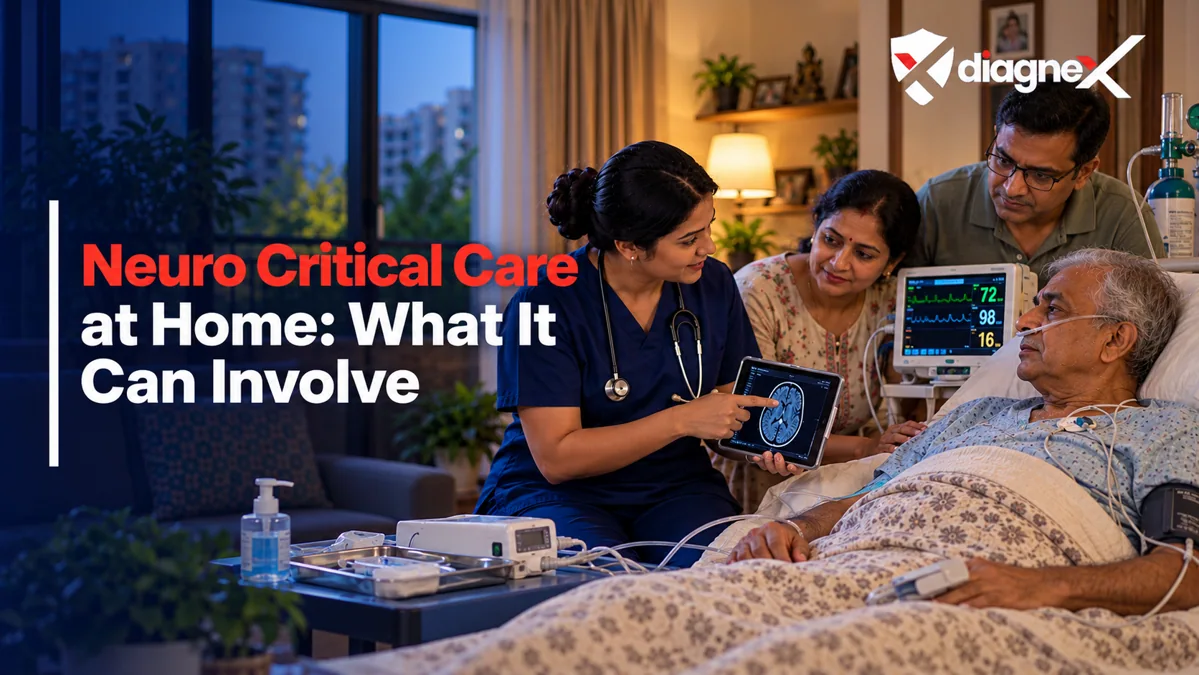
Neuro critical care at home describes a high-dependency home-care arrangement for selected patients recovering from serious neurological illness or injury who are stable enough to leave hospital but still need substantial nursing, monitoring, respiratory support, medical devices or rehabilitation.
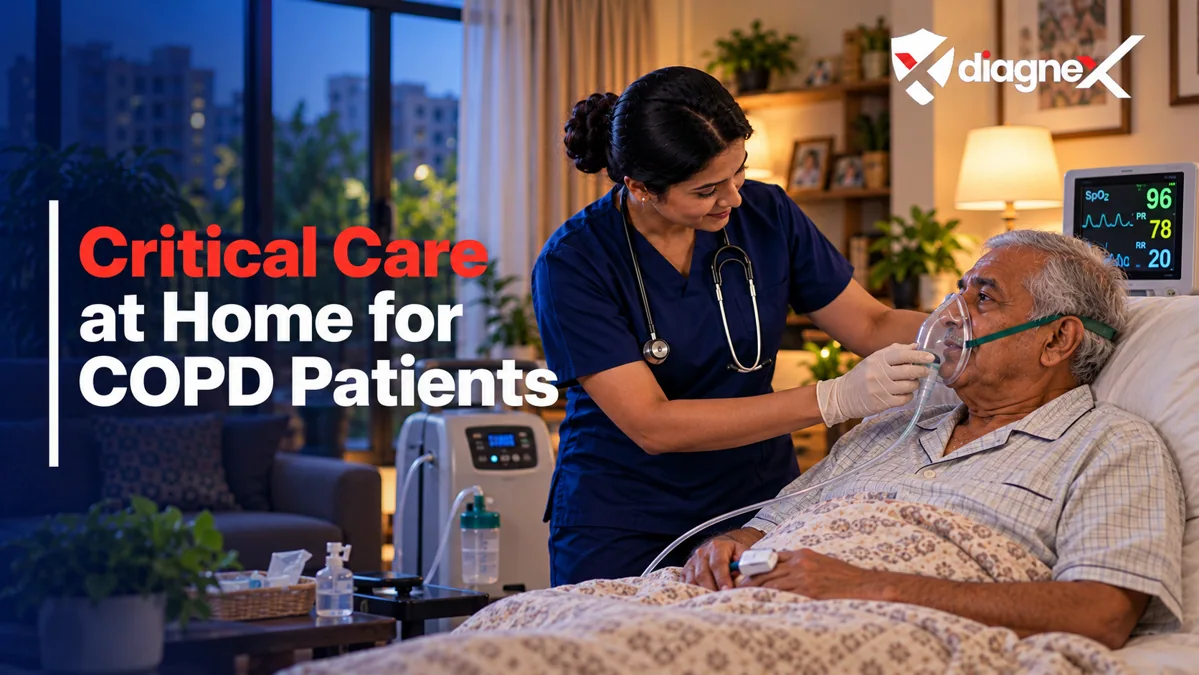
For related context, read Palliative Critical Care at Home: What It Means and Critical Care at Home for COPD Patients.
For related context, read Palliative Critical Care at Home: What It Means and Critical Care at Home for COPD Patients.
It should not be understood as a replacement for an acute neuro ICU. A hospital neurocritical-care unit can provide emergency imaging, neurosurgery, invasive monitoring, rapid laboratory testing, procedures and immediate specialist escalation. A home can continue selected parts of the care plan only when the treating team has confirmed that the patient's condition is sufficiently stable and predictable.
Patients considered for home care after neuro ICU may include selected people recovering from stroke, traumatic or other acquired brain injury, prolonged disorders of consciousness, neurosurgery or long periods of critical illness. The exact setup depends on the diagnosis, current neurological state, airway and feeding needs, mobility, equipment, nursing procedures and emergency-transfer plan.
Neuro Critical Care at Home Is a Step-Down Concept
The safest way to understand neuro critical care at home is as selected step-down or long-term high-dependency care.
The patient has usually passed the phase in which immediate hospital diagnostics and rapid procedures are expected to be needed, but may still require closer observation and more clinical support than ordinary home nursing.
What Is Home ICU Care? A Complete Guide for Families explains why the term "Home ICU" describes a patient-specific care system rather than a standard equipment package.
Which Neurological Patients May Need High-Dependency Home Care?
The group is broad. Some patients may be recovering from a major stroke, severe traumatic brain injury, intracranial haemorrhage, neurosurgery or a prolonged ICU admission. Others may remain dependent on a tracheostomy, tube feeding, oxygen, suction or extensive nursing even after the acute neurological problem has stabilised.
The CDC notes that moderate or severe traumatic brain injury can lead to long-term health problems and may require specialised medical and rehabilitation care. Current stroke rehabilitation guidance similarly emphasises coordinated multidisciplinary care across the recovery continuum.
Suitability for home care depends on what the patient needs now, not simply on the name of the neurological diagnosis.
Who Is Not Suitable for Neuro Critical Care at Home?
A patient who is neurologically unstable or likely to need rapid hospital intervention should remain in hospital.
Examples include new or worsening loss of consciousness, rapidly changing neurological signs, uncontrolled seizures, escalating respiratory failure, severe new weakness, new unequal pupils, repeated vomiting with neurological deterioration or any situation in which emergency imaging or neurosurgical intervention may be needed.
Who Is Suitable for ICU Care at Home? explains why stability and a realistic escalation pathway are essential before discharge.
Treating-Team Approval Comes Before Setup
The home-care plan should begin with a clinical decision, not equipment selection.
The treating team should identify the current diagnosis, neurological status, expected observations, medicines, respiratory needs, feeding route, nursing procedures, rehabilitation plan, follow-up schedule and emergency-transfer criteria.
Families should not assume that a hospital bed, monitor and oxygen supply are enough to make a patient safe at home.
Home Care Cannot Reproduce Every Neuro ICU Capability
A neuro ICU has immediate access to specialist physicians, emergency CT or MRI, laboratory testing, invasive monitoring, neurosurgery, resuscitation and other hospital departments.
Home care can bring selected bedside capabilities into the residence, but it cannot automatically reproduce the hospital system around the bed.
Is ICU at Home Safe? What Needs to Be in Place explains why home ICU safety depends on the complete care structure, including patient selection, qualified staff, equipment, backup systems, reassessment and hospital escalation.
Neurological Observation May Be Part of the Plan
Depending on the diagnosis, nurses may need to observe alertness, responsiveness, pupils, limb movement, speech, behaviour or seizure activity.
The treating team should specify what matters for that individual and how changes should be reported. Families should avoid creating their own neurological scoring system without instruction. For more on the practical service arrangements, review home nursing before deciding what information the care team needs.
A monitor cannot replace bedside neurological observation because many important changes first appear in consciousness, movement, speech or behaviour.
Sudden Neurological Change Is an Escalation Trigger
A sudden fall in consciousness, new weakness, new speech difficulty, new facial asymmetry, repeated vomiting, a severe new headache, abnormal posturing or new unequal pupils requires urgent assessment.
These changes can indicate a new neurological event or complication that may need hospital imaging or intervention.
The presence of an ICU nurse at home does not make it safe to delay transfer when the neurological picture is changing rapidly.
Disorders of Consciousness Need Specialist Follow-Up
Some patients remain minimally conscious or have another prolonged disorder of consciousness after severe brain injury.
The American Academy of Neurology guideline on disorders of consciousness recommends specialised assessment and repeated evaluation because diagnosis and prognosis can evolve over time.
Home nursing may provide day-to-day care, but it should not replace scheduled neurological and rehabilitation reassessment.
Airway and Breathing Support Can Be Part of Home Neuro Care
Some neurological patients return home with prescribed oxygen, suction needs, a tracheostomy, non-invasive ventilation or other respiratory support.
The Home ICU pathway describes how selected monitoring, breathing support, nursing and equipment may be brought to the bedside when the treating doctor agrees that home is appropriate.
The exact setup should come from the respiratory and discharge plan rather than from a generic home ICU bundle.
Tracheostomy Care Requires Competent Nursing
Patients with a tracheostomy may need suction, humidification, stoma care, tube security, secretion management and emergency procedures.
The nurse assigned should be competent in the specific tracheostomy and the prescribed plan. Backup supplies and emergency equipment should be accessible.
Suspected tube displacement, severe breathing difficulty, cyanosis, rapidly falling oxygen saturation or inability to clear secretions requires urgent escalation.
Ventilator or Non-Invasive Support Needs Backup Planning
A patient who depends on mechanical ventilation, BiPAP or another respiratory device needs a realistic plan for equipment failure.
Families should know how long battery backup lasts, what oxygen backup is available and whom to call if the primary device fails.
A home setup is unsafe if essential breathing support depends on one machine or one power source without an alternative.
Swallowing Safety Is Often a Core Neuro Care Issue
Stroke and brain injury can both affect swallowing.
A patient who has not been cleared for oral food, fluids or medicines should not be given them because they appear more alert. Dysphagia can lead to choking, aspiration, dehydration and pneumonia.
The feeding route and texture plan should come from the swallowing assessment and treating team.
Tube Feeding May Continue at Home
Some patients require nasogastric or gastrostomy feeding during recovery.
The home-care plan should specify the prescribed feed, water, medicine administration, positioning, tube care and what to do if the tube is blocked, displaced or accidentally removed.
Family members should not attempt tube replacement or use improvised blockage-clearing techniques.
Aspiration Risk Needs Continuous Attention
Watch for coughing during feeding, repeated choking, wet or gurgly voice, new chest congestion, fever, faster breathing or falling oxygen saturation.
These signs may indicate aspiration or respiratory infection and should not simply be treated as expected after neurological injury.
Severe choking or breathing difficulty requires urgent emergency action.
Seizure Planning Should Be Written Down
Some neurological patients have known seizure risk after stroke, brain injury, intracranial haemorrhage or neurosurgery.
The care plan should identify regular antiseizure medicines, rescue medicines if prescribed, seizure first-aid instructions and the point at which emergency services should be called.
Home ICU After Brain Injury: What Families Need to Plan explains why new, prolonged or repeated seizures require clear escalation.
Medication Administration Must Be Organised
Neurological patients may have complex medication regimens that include antiseizure medicines, antiplatelets, anticoagulants, blood-pressure medicines, pain medicines, bowel regimens, antibiotics or other treatment.
A single current medication chart should be available to all nurses and caregivers. The team should know who gives each medicine, which formulations must not be crushed and how medicines are handled if a feeding tube is used.
Dose changes and neurological treatment decisions remain with the treating clinician.
Blood Pressure, Glucose and Temperature May Need Monitoring
Monitoring requirements vary by diagnosis.
Some patients need blood pressure, pulse, temperature, oxygen saturation or glucose checked according to a schedule. The treating team should define the target ranges and escalation thresholds for that individual.
Families should not use generic internet targets for a patient who has had a stroke, brain injury or neurosurgery.
Pressure-Injury Prevention Is Essential in Immobile Patients
Patients with severe neurological disability may be unable to reposition themselves.
A pressure-relieving mattress, skin inspection, regular repositioning, moisture control and adequate nutrition may be part of the plan. Current stroke rehabilitation guidance identifies skin breakdown as an important complication of immobility that can interfere with recovery. If the family is considering support at home, the Diagnex guide to bedridden patient care at home explains the service pathway and its limits.
Redness that does not fade, blistering or skin breakdown should be assessed promptly.
Venous Thromboembolism Risk May Need Review
Severe immobility can increase the risk of deep-vein thrombosis and pulmonary embolism.
Current stroke rehabilitation guidance identifies venous thromboembolism as another important complication of immobility. Prevention may involve movement, compression or medicines depending on the patient's condition.
Families should not start or stop blood thinners without the treating team's instruction.
Positioning Protects Skin, Joints and the Airway
Positioning can influence pressure risk, comfort, breathing, feeding safety and joint alignment.
The nursing and rehabilitation plan may specify head elevation, limb support, turning and positioning for feeds. Caregivers should be taught how to move the patient without pulling on a weak shoulder or forcing a spastic joint.
The exact schedule should be individualised rather than copied from another patient.
Spasticity and Contracture Prevention Need Rehabilitation Input
Neurological injury can lead to abnormal muscle tone, stiffness, posturing and contractures.
Stretching, splinting, positioning and movement programmes should follow assessment by appropriate rehabilitation professionals. Aggressive stretching or untrained handling can cause pain or injury.
Rehabilitation at Home may be relevant when the patient needs coordinated neurological recovery support outside hospital.
Physiotherapy Should Match Medical Stability
The goals of physiotherapy may include bed mobility, sitting balance, transfers, strength, walking and prevention of deconditioning.
The CDC notes that rehabilitation can improve function and quality of life after moderate or severe traumatic brain injury. Current stroke guidance likewise emphasises multidisciplinary rehabilitation across recovery.
Physiotherapy at Home may be relevant when the treating team considers home-based mobility work appropriate.
Speech and Communication Support May Be Needed
Stroke and brain injury can affect language, speech, memory, attention and the ability to communicate needs.
Caregivers should know the patient's preferred communication method and allow time for responses. A speech-language professional may be needed for aphasia, dysarthria, cognitive-communication problems or swallowing.
Communication difficulty should not automatically be interpreted as lack of understanding.
Behaviour and Agitation Need a Clinical Approach
Agitation can occur during recovery from neurological injury and may be related to pain, overstimulation, sleep disruption, infection, medication effects, confusion or the injury itself.
A calm, structured environment may help, but sudden or severe behavioural change deserves medical review.
Physical restraint should not be used casually at home because it can create additional injury and distress.
Neuro Critical Care Nursing Requires Specific Competencies
An ICU nurse at home should be selected for the procedures the patient actually needs.
These may include neurological observation, airway and tracheostomy care, suction, oxygen, tube feeding, catheter care, pressure-area management, medicines, glucose monitoring and clinical documentation.
Home Nursing may be relevant when the patient needs defined skilled nursing in addition to general supervision.
Not Every Patient Needs 24-Hour ICU Nursing
The level of nursing coverage should match clinical dependency.
Some patients may need continuous critical-care experienced nursing, while others may need scheduled nursing visits combined with caregiver support. The correct model depends on airway risk, feeding, medicines, consciousness, mobility and the probability of deterioration.
Staffing should be reassessed as the patient's condition changes.
Equipment Must Be Selected From the Clinical Plan
Possible equipment includes a hospital bed, pressure-relief mattress, multiparameter monitor, pulse oximeter, oxygen source, suction machine, BiPAP, ventilator, feeding pump, infusion or syringe pump, wheelchair, commode or hoist.
Not every neuro patient needs all of these items.
How to Set Up an ICU at Home: Step-by-Step Overview explains why equipment selection should follow the clinical assessment rather than lead it.
The Home Environment Must Support Safe Care
The room needs enough space for the bed, equipment and safe staff access.
Cables and oxygen tubing should not create trip hazards. Essential equipment should be reachable without blocking doors or emergency access.
If the patient may need stretcher transfer, families should consider whether the route from the room to the exit is practical.
Power, Oxygen and Device Failure Need Backup Plans
Any patient who depends on powered medical equipment needs a failure plan.
Backup power, oxygen, replacement consumables and technical support should be arranged according to the devices in use. Staff should know what to do if a monitor, suction machine, ventilator or feeding pump fails.
Equipment readiness is part of clinical safety, not a separate logistics issue.
Infection Prevention Still Matters at Home
Hand hygiene, clean handling of tracheostomy and feeding equipment, appropriate catheter care, wound care and safe waste disposal should be part of the routine.
A home is not a sterile hospital unit, but preventable device-related infection can still cause serious deterioration.
Fever, increasing secretions, wound drainage, new oxygen requirement or sudden change in alertness should be reported promptly.
Caregiver Training Should Happen Before Discharge
Family members should know which tasks they are expected to perform and which must remain nursing or medical responsibilities.
Training may include positioning, transfer assistance, feeding precautions, use of the call system, skin observation, seizure first aid and recognition of neurological or respiratory deterioration.
Hospital ICU to Home: How the Transition Is Planned explains why handover, training, equipment readiness and emergency planning should be completed before discharge.
Post-ICU Recovery Needs More Than Monitoring
Surviving a neuro ICU admission can leave a patient with weakness, fatigue, cognitive problems, sleep disruption, emotional changes and loss of independence.
Post-ICU Care at Home: What Families Should Expect explains why recovery plans often include nursing, rehabilitation, nutrition, medication management and follow-up rather than only vital-sign monitoring. For care planning beyond this article, compare medical equipment on rent with the instructions already given by the treating professional.
The home-care plan should evolve as the patient's medical dependency decreases and rehabilitation needs increase.
Regular Reassessment Is Essential
Neuro critical care needs can change substantially over weeks or months.
Current rehabilitation guidance emphasises coordinated care and periodic reassessment to identify new problems or decline. Equipment, nursing hours and rehabilitation intensity may all need to change as the patient improves or deteriorates.
A static care plan is rarely appropriate for a long neurological recovery.
Every Home Neuro-Care Plan Needs an Escalation Pathway
The family and care team should know which hospital will receive the patient, how transport will be arranged, who should be called first and which documents should travel with the patient.
The plan should cover neurological change, seizures, airway emergencies, device failure, aspiration and major infection signs.
Home care should make escalation more organised, not harder.
When Should a Neuro Patient Be Sent Back to Hospital?
Urgent hospital assessment is needed for: • a sudden drop in consciousness or inability to wake normally; • new weakness, facial droop, speech difficulty or unequal pupils; • repeated vomiting with neurological deterioration; • a new severe headache or abnormal posturing; • a new or prolonged seizure or repeated seizures without recovery; • severe breathing difficulty, cyanosis or rapidly increasing oxygen requirement; • suspected tracheostomy displacement or inability to clear the airway; • uncontrolled bleeding; • persistent vomiting with inability to take essential medicines or feeds; • shock-like symptoms or other major clinical deterioration.
The patient's discharge plan may contain additional triggers and should always take priority.
When Home Neuro Critical Care May No Longer Be Appropriate
Home care may stop being appropriate if the patient becomes unstable, repeatedly needs emergency imaging or procedures, develops escalating respiratory support needs, has uncontrolled seizures or requires interventions that cannot be delivered safely outside hospital.
It may also become unsafe if adequate nursing, backup equipment, power or emergency transport can no longer be maintained.
Returning to hospital when needs increase is a safety decision, not a failure of home care.
A Practical Neuro Critical Care at Home Checklist
Before discharge, families can confirm: • The treating team agrees that home is clinically appropriate. • The current neurological status and observation plan are documented. • Airway, oxygen, suction and tracheostomy requirements are clear. • Feeding route and swallowing precautions are written down. • Seizure medicines and emergency instructions are documented. • Medication responsibilities are organised. • Pressure-area and positioning plans are in place. • Rehabilitation goals and follow-up are coordinated. • Required equipment has been installed and tested. • Backup power and oxygen are available when essential. • Nursing competencies and shift coverage are confirmed. • Infection-prevention procedures are clear. • Emergency contacts and hospital-transfer arrangements are written down. • Family caregivers know which changes require immediate escalation.
How to Arrange Neuro Critical Care at Home With Diagnex
To plan neuro critical care at home, share the hospital discharge plan, diagnosis, current level of consciousness, neurological deficits, airway or tracheostomy needs, oxygen requirements, feeding method, seizure history, mobility, nursing procedures, medicines, equipment needs, rehabilitation plan and locality.
Diagnex can review whether the requirement fits Home ICU, Home Nursing, Rehabilitation at Home, Physiotherapy at Home or another appropriate pathway based on the treating team's plan and the patient's current stability. Exact staffing, equipment and service availability are confirmed for the specific locality and care requirement.
For service coordination, use the Diagnex Contact page.
Frequently asked questions
What is neuro critical care at home?
It is a high-dependency home-care arrangement for selected neurologically ill or injured patients who are stable enough to leave hospital but still need substantial nursing, monitoring, respiratory support, medical devices or rehabilitation.
Is neuro critical care at home the same as a neuro ICU?
No. Home care can reproduce selected bedside capabilities, but it does not provide the immediate imaging, neurosurgery, invasive monitoring and rapid multidisciplinary escalation available in a hospital neuro ICU.
What patients may need neuro critical care at home?
Selected stable patients recovering from major stroke, traumatic or acquired brain injury, neurosurgery, prolonged disorders of consciousness or other serious neurological illness may need high-dependency home care.
Can a patient with a tracheostomy receive neuro care at home?
Yes, selected stable patients can be cared for at home when competent staff, suction, prescribed respiratory support, backup equipment and a clear emergency plan are in place.
Does every neuro patient need 24-hour ICU nursing?
No. Nursing hours should match the patient's airway, feeding, neurological, mobility and clinical needs. Some patients need continuous coverage while others need scheduled skilled nursing plus caregiver support.
Can rehabilitation continue during home neuro critical care?
Yes, when the patient is medically stable enough. Physiotherapy and other rehabilitation can be coordinated with the nursing and neurological plan and adjusted as recovery progresses.
When should a neuro patient at home return to hospital?
A sudden fall in consciousness, new neurological deficit, prolonged seizure, severe breathing or airway problem, uncontrolled bleeding or other major deterioration should trigger urgent hospital escalation according to the patient's plan.
References and further reading
This article provides general education and does not replace a neurologist, neurosurgeon, rehabilitation physician, intensivist or hospital discharge plan. Clinical points were cross-checked against current CDC guidance on recovery after moderate or severe traumatic brain injury, the 2026 American Heart Association and American Stroke Association guideline for adult stroke rehabilitation and recovery, American Academy of Neurology guidance on prolonged disorders of consciousness and Brain Trauma Foundation guideline resources for severe traumatic brain injury.
Related Diagnex services and guides
Explore the Home ICU service pathway and the Home ICU article library for more information.
Diagnex publishes general healthcare information to support care planning. Individual decisions about diagnosis, prescriptions and treatment remain with the treating professional. Read our medical content policy and editorial standards.