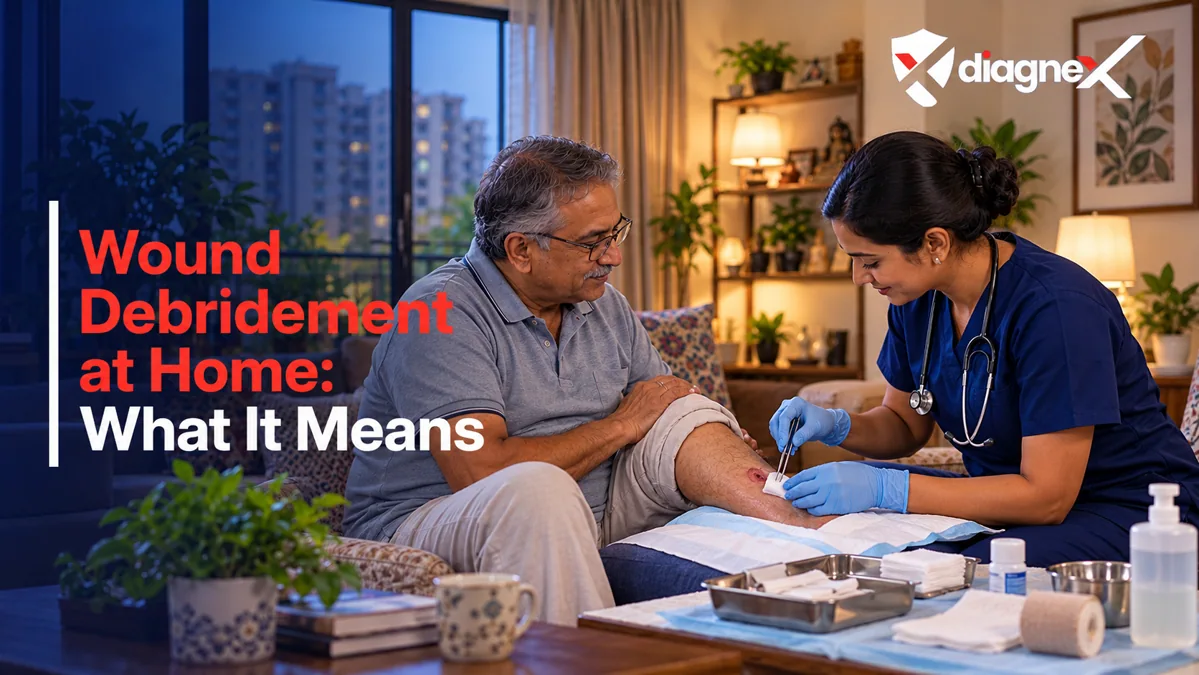
Wound debridement is the removal of dead, damaged, or contaminated tissue from a wound so that the wound can be assessed more clearly and managed appropriately. It is used in selected wounds, not every wound, and it should be performed only when there is a clear clinical reason.
For related context, read Wound Dressing at Home Cost: What Influences the Price? and Wound Dressing at Home: A Complete Patient Guide.
For related context, read Wound Dressing at Home Cost: What Influences the Price? and Wound Dressing at Home: A Complete Patient Guide.
Wound debridement at home may be appropriate in carefully selected situations when the patient is stable, the wound has been assessed, the required professional is appropriately trained, and the home setting is suitable for the planned procedure. In many other situations, clinic or hospital care may be safer.
The important point is that debridement is not simply a more intensive dressing change. The decision to debride depends on wound depth, tissue type, infection, blood flow, pain, bleeding risk, medical conditions, and the overall treatment plan. A proper wound assessment should come first.
What Does Wound Debridement Mean?
Debridement is the process of removing non-viable tissue, debris, or other material that may interfere with wound assessment and healing. Dead tissue can make it difficult to see the true wound bed, can trap bacteria, and may prevent the wound from progressing as expected.
A healthcare professional may consider debridement when a wound contains necrotic tissue, slough, thick callus, contaminated material, or other tissue that needs removal as part of the wound care plan.
Diagnex's Wound Debridement service is the most directly relevant internal pathway for patients whose treating team has advised debridement as part of wound management.
Why Wound Assessment Comes Before Debridement
A wound should be assessed before debridement because dead tissue is only one part of the picture. The clinician also needs to understand why the wound developed and whether blood flow, infection, pressure, diabetes, swelling, or repeated trauma are affecting healing.
A wound assessment may include: • wound location; • length, width, and depth; • type of tissue in the wound bed; • amount and type of drainage; • odour; • surrounding skin condition; • pain and sensation; • signs of infection; • circulation and perfusion; • pressure or friction; • relevant medical conditions; • medicines that may affect bleeding or healing.
Debridement without understanding these factors can be unsafe or ineffective.
Which Types of Wounds May Need Debridement?
Debridement may be considered for selected pressure ulcers, diabetic foot ulcers, chronic wounds, infected wounds, traumatic wounds, and some surgical wounds when non-viable tissue is present.
Not every wound with dark or yellow tissue should be debrided immediately. The significance of the tissue depends on the wound type, blood flow, infection status, and clinical context.
For broader wound management, Diagnex's Wound Care and Dressing service may be relevant when the patient requires repeated dressing and wound monitoring.
What Are the Main Types of Wound Debridement?
There are several debridement methods. The most appropriate option depends on the wound, the amount of non-viable tissue, urgency, pain, blood supply, bleeding risk, and the clinician's judgement. For more on the practical service arrangements, review wound care at home before deciding what information the care team needs.
Sharp or Surgical Debridement
Sharp debridement uses instruments such as a scalpel, scissors, or curette to remove non-viable tissue. It can be faster than some other methods, but it requires appropriate clinical training and careful assessment.
This method may not be suitable for every wound or every home setting. Significant bleeding risk, poor circulation, deep infection, uncertain anatomy, or the need for more extensive tissue removal may make clinic or hospital care more appropriate.
Autolytic Debridement
Autolytic debridement supports the body's own enzymes and moisture to soften and break down dead tissue. Certain moisture-retentive dressings may be used when clinically appropriate.
This method is generally slower and may be selected for wounds where urgent tissue removal is not required. Dressing choice still depends on wound characteristics and the treating plan.
Enzymatic Debridement
Enzymatic debridement uses prescribed topical agents to help break down non-viable tissue. These products should only be used when clinically indicated and according to the prescribed instructions.
Mechanical Debridement
Mechanical debridement removes tissue through physical force. Some older methods can be painful and may remove healthy tissue as well as dead tissue.
The method used should be chosen by the treating professional, not improvised at home.
When Can Wound Debridement Be Done at Home?
Home debridement may be considered when the patient is stable, the wound has been assessed, the planned method is appropriate for the home setting, pain and bleeding risk can be managed safely, and there is a clear escalation plan.
A home procedure may be more practical for patients who are bedridden, have limited mobility, or already receive home nursing. However, convenience should never override safety.
The clinician should also consider whether adequate lighting, infection control, disposal of used materials, positioning, and post-procedure monitoring can be achieved safely at home.
When Is Home Debridement Not Appropriate?
Some wounds should not be debrided at home or may need specialist review before any tissue is removed.
Clinic or hospital care may be more appropriate when there is: • suspected severe or deep infection; • significant bleeding risk; • poor or uncertain blood flow; • rapidly spreading tissue damage; • exposed tendon, joint, bone, or other deep structures; • severe pain that cannot be managed safely; • unstable medical condition; • rapidly worsening diabetic foot ulcer; • large areas of necrotic tissue; • uncertainty about the wound anatomy or diagnosis.
The treatment setting should match the complexity of the wound.
Why Blood Flow Matters Before Debridement
Adequate circulation is important for wound healing. In a poorly perfused limb, aggressive removal of tissue can expose deeper structures without giving the wound enough blood supply to heal.
This is particularly important in diabetic foot wounds and wounds in patients with known vascular disease. A clinician may need to assess pulses, skin temperature, colour, capillary refill, or arrange vascular testing before deciding on debridement.
A wound that looks dry, black, and poorly perfused should not automatically be debrided without proper assessment.
Debridement and Infected Wounds
Some infected wounds may benefit from removal of devitalised tissue, but debridement alone does not treat the infection. Depending on severity, the patient may also need antibiotics, drainage, cultures, imaging, or hospital care.
If the wound is becoming more red, swollen, painful, foul smelling, heavily draining, or associated with fever, the treating clinician should be informed.
Diagnex's article on Infected Wound Dressing at Home: Warning Signs That Need Medical Review explains when wound infection needs escalation rather than routine dressing alone.
What Happens During Wound Debridement at Home?
The exact process depends on the debridement method and wound type. A home visit may involve wound assessment, preparation of the procedure area, pain management measures, removal of non-viable tissue as clinically indicated, bleeding control, wound cleansing, dressing, and documentation.
Before the Procedure
The healthcare professional may review: • the wound diagnosis and treatment plan; • allergies; • medicines, especially blood thinners; • diabetes and circulation history; • current pain level; • previous wound photographs or measurements; • recent infection signs; • previous debridement; • the patient's ability to tolerate the procedure. If the family is considering support at home, the Diagnex guide to home nursing explains the service pathway and its limits.
Families can use the Home Clinical Procedure Safety Checklist for Families to prepare the environment for a planned home procedure.
During the Procedure
The wound is assessed again before tissue is removed. The clinician should work only within the planned scope of treatment and stop if there is unexpected bleeding, severe pain, uncertainty about tissue depth, or another safety concern.
Debridement may reveal a deeper wound than was visible before. This is one reason why wound assessment and escalation pathways are important.
After the Procedure
The wound is cleaned and dressed according to the clinical plan. The patient or caregiver should know when the next review is due, how to protect the dressing, and which changes require earlier medical attention.
Repeated home procedures should follow consistent infection-control practices. Diagnex's guide on How Infection Control Works During a Clinical Procedure at Home provides a broader framework for clean preparation and safe handling.
Does Debridement Hurt?
Pain varies according to wound depth, nerve function, tissue type, method used, and the patient's underlying condition. Some patients with neuropathy may have reduced sensation, while others may experience significant discomfort.
Pain should be assessed before, during, and after the procedure. The professional performing debridement should follow the pain management plan appropriate to the patient and stop if pain is unexpectedly severe.
Can Family Members Debride a Wound at Home?
No. Family members should not cut, scrape, or remove dead tissue from a wound themselves. It can be difficult to distinguish dead tissue from viable tissue, and untrained removal can cause bleeding, infection, or deeper injury.
Even when tissue appears loose, it should not be pulled away unless the treating professional has specifically advised how it should be managed.
What Is Complex Wound Dressing After Debridement?
After debridement, the wound may require a dressing selected for its depth, drainage, tissue condition, and healing goals. Some wounds need absorbent dressings, cavity dressings, antimicrobial products, moisture-balancing dressings, or other specialised materials.
Complex wound dressing should follow the treatment plan. A more expensive or more advanced dressing is not automatically better. The product needs to match the wound.
How Often Is Debridement Needed?
Some wounds need debridement once, while others may require repeated removal of non-viable tissue over time. The frequency depends on how quickly devitalised tissue develops, wound progress, infection, circulation, and the selected debridement method.
Repeated debridement should be based on wound reassessment rather than a fixed schedule.
How Do You Know if the Wound Is Improving?
Signs of progress can include healthier tissue in the wound bed, reduction in wound size or depth, controlled drainage, less surrounding inflammation, and gradual wound closure.
A wound that is becoming larger, deeper, more painful, more heavily draining, or increasingly malodorous needs reassessment.
Consistent measurements and wound documentation can help the treating team understand whether the current plan is working.
When Does a Wound Need Urgent Medical Review?
Urgent review may be required if there is: • rapidly spreading redness or swelling; • high fever or chills; • severe or increasing pain; • significant bleeding; • sudden blackening or rapidly changing tissue; • exposed bone or deep structures; • confusion or acute weakness; • foul-smelling heavy drainage; • signs of poor blood flow such as a cold, pale, blue, or severely painful limb.
In these situations, another home procedure should not delay medical or hospital assessment.
When Is a Home Nurse Helpful for Complex Wound Care?
A home nurse may be helpful when the wound needs repeated dressing, monitoring, documentation, pressure relief support, or coordination with the treating clinician.
For patients who require ongoing wound management rather than a single procedure, Home Nursing Services may be more appropriate than isolated visits.
If the patient has recently returned home from hospital and needs continued wound care, Post-Hospital Nursing may also be relevant. For care planning beyond this article, compare surgery dressing at home with the instructions already given by the treating professional.
How to Prepare for Wound Debridement at Home
Before arranging wound debridement at home, keep the following information ready: • wound location and cause; • how long the wound has been present; • previous wound assessment; • any known diagnosis; • current dressing plan; • diabetes or circulation problems; • medicines, especially blood thinners; • allergy history; • current pain level; • fever, redness, drainage, odour, or swelling; • previous wound measurements or photographs; • the next planned medical review.
This information helps determine whether home debridement is suitable or whether the wound should be managed in a clinic or hospital.
How to Arrange Wound Debridement at Home With Diagnex
If wound debridement has been recommended, share the wound location, available clinical instructions, current dressing plan, relevant medical conditions, locality, and any recent changes in the wound.
Diagnex can review the requirement and route the enquiry to the appropriate Clinical Procedures at Home or nursing pathway based on the requested procedure, professional requirement, locality, and available clinical information.
For service coordination, use the Diagnex Contact page.
Frequently asked questions
What is wound debridement?
Wound debridement is the removal of dead, damaged, or contaminated tissue from a wound to support assessment and ongoing wound management.
Can wound debridement be done at home?
Selected wounds may be debrided at home when the patient is stable, the wound has been assessed, the planned method is suitable, and an appropriately trained professional is available.
Is debridement the same as wound dressing?
No. Dressing protects and manages the wound surface. Debridement involves removing non-viable tissue and is a separate clinical intervention.
Can family members remove dead tissue from a wound?
No. Untrained removal can damage healthy tissue, cause bleeding, and increase infection risk.
Does every chronic wound need debridement?
No. Whether debridement is appropriate depends on wound type, tissue condition, blood flow, infection, pain, and the overall treatment plan.
How often is wound debridement needed?
There is no fixed schedule. Some wounds need one procedure, while others need repeated debridement based on ongoing wound assessment.
When should debridement be done in hospital instead?
Hospital or specialist care may be safer for deep infection, significant bleeding risk, poor circulation, exposed deep structures, severe pain, large areas of dead tissue, or an unstable patient.
References and further reading
This article provides general education and does not replace individual wound assessment. Clinical points were cross-checked against current wound care information from MedlinePlus and the Agency for Healthcare Research and Quality.
Related Diagnex services and guides
Explore the Clinical Procedures service pathway and the Clinical Procedures article library for more information.
Diagnex publishes general healthcare information to support care planning. Individual decisions about diagnosis, prescriptions and treatment remain with the treating professional. Read our medical content policy and editorial standards.